Bringing Cheetahs to Malawi

As published in Africa Geographic on 13 December 2019 (www.africageographic.com)

A total of 5,645 kilometres… That is 845 km more than the distance across the United States of America, 2,500 km further when travelling east to west across Australia, and 2,845 km more than the distance across South Africa. That distance does not even count all the little trips in between, including the time spent travelling to and from the various holding sites along the way.

Three countries and 5,645 km later it all comes down to this moment… The gate is pulled open and everyone holds their breath, waiting. Cell phones set to video mode are held out, GoPros and professional cameras held steady. All eyes are stationed on the impala leg that is positioned just outside of the gate of the holding boma (enclosure)  a lure, an offering, one last easy meal before the uncertainty of hunting in the wild. After what feels like an eternity, a flash of spotted gold races out of the gate and passes the free meal. He then stops, briefly assessing the situation and his newfound freedom. The large male doubles back and grabs the leg before disappearing into the bush.

Smiles break out throughout the group and everyone breathes a sigh of relief. It has been a long journey of 5,645 km and now the first wild cheetah in southern Malawi in over 90 years has left his footprints in the soil.

🎥 The moment the male cheetah is released into Majete Wildlife Reserve in Malawi © Jo Taylor

Moments later, the sound of branches snapping and a bushbuck races past us, barking loudly, with a spotted predator in pursuit. There is a new danger on the block. The cheetah gives up his half-hearted attempt on the bushbuck and heads back to the meat that does not require chasing. He eats a portion and then heads off past ancient baobabs to explore his new home in Majete Wildlife Reserve.

The female cheetah, named Samara, remains cautious and on alert after being released into her new home in Majete Wildlife Reserve in Malawi © Jo Taylor A female cheetah, named Samara, remains cautious and on alert after being released into a holding enclosure in Majete Wildlife Reserve in Malawi © Jo Taylor

In the beginning of the 20th Century, over 100,000 cheetahs roamed Africa and Asia, but by the end of that century, the wild cheetah population had reduced to 15,000. Currently, the total population is estimated at 7,100 adult and adolescent animals, with 4,297 living in Southern Africa, 2,290 in Eastern Africa and 457 in Western, Central, and Northern Africa. Cheetahs are listed as ‘Vulnerable’ by the IUCN Red List, and have been eradicated from 90 percent of their historical range in Africa, while in Malawi the entire population was extirpated in the 1980s after decades of habitat loss, human-wildlife conflict and poaching.

Now, in a bid to restore what once was, a collaboration between African Parks, the Malawian Department of National Parks and Wildlife (DNPW), and the Endangered Wildlife Trust (EWT) has allowed five carefully selected cheetahs to be successfully reintroduced into Malawi’s Majete Wildlife Reserve  with the hopes that this crucial founder population will help to grow the population range of this vulnerable big cat.

The cheetahs were donated by Welgevonden, Samara, Dinokeng and Madikwe game reserves in South Africa. Each individual was carefully selected via the EWT’s Cheetah Metapopulation Project, which creates safe spaces for cheetahs while managing populations across reserves to ensure genetic diversity. This reintroduction of five wild cheetahs, in conjunction with a successful reintroduction into Liwonde National Park in 2017, now increases the nation’s total population to 20 individuals. These translocation initiatives are critical for the preservation of the species – and they help to promote tourism, which generates vital funding for the parks and for local communities.

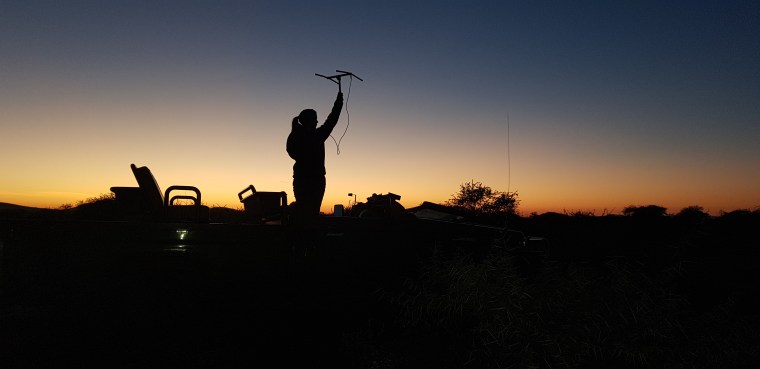
📷 Clockwise from top left: 1) Majete Wildlife Reserve rangers Nelio Stewart, Tizola Moyo and Dickson Kalikokha use telemetry to monitor and safeguard Majete’s black rhino population © Jo Taylor; 2) The Ford Wildlife Foundation bakkie (pickup truck), loaded up with the latest female cheetah, waits for all the paperwork to be checked over at the Mozambique border post © Jo Taylor; 3) Jo with rangers Dickson, Tizola and Nelio after a morning of tracking © Johan “Vossie” Vorster; 4) Jo using a high vantage point to lookout while monitoring the cheetahs © Johan “Vossie” Vorster; 5) Vincent chats with a little girl and her family at the Malawi border post as we wait for more paperwork to be checked before crossing © Jo Taylor

The most recent move of a female cheetah  named ‘Samara’  to Majete was by vehicle in a bakkie (pickup truck). Vincent van der Merwe (EWT Cheetah Metapopulation Project manager and National Geographic Explorer), Johann “Vossie” Vorster (National Geographic filmmaker) and I crossed three international borders to relocate her from South Africa to Malawi. The cheetah was a trooper as her transport container bounced along poorly maintained roads, waiting at border posts for all the correct documents to be checked over by officials, and travelling day and night for over 55 hours. At the border posts, people would gather around to try and get a glimpse of what was in the wooden boxed labelled with African Parks and EWT stickers. Rumours of leopards and tigers were whispered amongst the crowds.

Travelling through Tete in Mozambique was the warmest part of the journey, but thanks to Vincent’s innovative thinking, we rigged up a system to deliver cool air conditioning from the bakkie directly into the cheetah’s container. This kept her from overheating during the hot portions of the trip.

Many cups of coffee, packets of pistachios and power bars later we made our way down the winding roads to Majete’s gate, where the cheetah was able to stretch her legs in the holding boma. Here she will remain for a few weeks as she acclimatizes to her new surroundings, as did the other cheetahs prior to their release into the wilds of Majete. We have high hopes for this female and for the four other cheetahs who have travelled such vast distances to make this reintroduction dream come true.

Read more about cheetahs here: The Cheetah, and continue reading below for information about Majete, African Parks and the Endangered Wildlife Trust

📷 Clockwise from top left: 1) Preparing for the release of the two Welgevonden cheetah siblings © Jo Taylor; 2) Just before the big moment when the very first cheetah, from Madikwe, is released from the holding boma and into Majete’s wilderness © Jo Taylor; 3) Andrew, Jo and Vincent carry meat to feed the remaining cheetahs in the holding boma. The cheetahs were kept here for several weeks in order to acclimate to their new environment © Johan “Vossie” Vorster; 4) Vincent, Andrew and Jo take a breather after climbing to the highest point to search for signals on the telemetry set while tracking the cheetahs © Johan “Vossie” Vorster; 5) The male sibling from Welgevonden proves that he is more than capable of living as a wild cheetah in Malawi days after being released © Jo Taylor

ABOUT MAJETE WILDLIFE RESERVE

When African Parks assumed responsibility of Malawi’s Majete Wildlife Reserve in 2003, the park was practically devoid of all wildlife, and the charcoal trade was driving the systematic removal of trees. Since then, Majete has become a case study for positive conservation development, with a pioneering rehabilitation and restocking programme that has set a precedent for similar projects across Africa. Today, Majete is flourishing, so much so that wildlife is being moved to populate other parks and private reserves within Malawi.

Within five years of African Parks taking responsibility for the reserve, over 2,000 animals had been reintroduced, including black rhinos in 2003; elephants in 2006; lions in 2012, and a host of other wildlife – making this budding reserve Malawi’s only Big 5 destination with now more than 12,200 animals thriving within its perimeter.

Park management has maintained a 15-year track record of zero poaching of rhinos and elephants since their introduction; and tourism has increased 14 percent from last year, with over 9,000 visitors (half of whom were Malawian nationals) – bringing in over US$550,000 to the reserve and communities.

Although Majete is open all year-round, the weather conditions vary according to the season. The wet season occurs from November to March, while the dry season runs from April to October. Temperatures range from 11 to 40 degrees Celsius, depending on the season.

Map of Malawi and location of Majete Wildlife Reserve

ABOUT AFRICAN PARKS

African Parks is a non-profit conservation organisation that takes on the complete responsibility for the rehabilitation and long-term management of national parks – in partnership with governments and local communities. Africa’s largest NGO (based on counter-poaching presence and area under protection), African Parks manages 15 national parks and protected areas in nine countries – covering over 10.5 million hectares in Benin, Central African Republic, Chad, the Democratic Republic of Congo, the Republic of Congo, Malawi, Mozambique, Rwanda and Zambia.

African Parks and Malawi’s Department of National Parks and Wildlife (DNPW) have been working closely together to rehabilitate habitat and restore biodiversity to the country’s parks since 2003, when a public-private partnership was formed for the management of Majete. African Parks subsequently assumed management of Liwonde (and Nkhotakota Wildlife Reserve) in partnership with DNPW in 2015, following the successful track record achieved in Majete.

ABOUT ENDANGERED WILDLIFE TRUST

The Endangered Wildlife Trust (EWT) has worked tirelessly for over 45 years to save wildlife and habitats, with its vision being a world in which both humans and wildlife prosper in harmony with nature. From the smallest frog, to the majestic rhino; from sweeping grasslands to arid drylands; from our shorelines to winding rivers: the EWT is working with you, to protect our world. The EWT’s team of field-based specialists is spread across southern and East Africa, where committed conservation action is needed the most.

Working with its partners, including businesses and governments, the EWT is at the forefront of conducting applied research, supporting community conservation and livelihoods, training and building capacity, addressing human wildlife conflict, monitoring threatened species and establishing safe spaces for wildlife range expansion.

The female cheetah that we drove for over 55 hours cautiously explores her new home © Jo Taylor

A Story of Cats and Dogs

As published on Sapmok.com

“Naaaaaaaaaaaaaaants ingonyama bagithi baba”

It is 3:45 in the morning, the sun has not even thought about rising, yet my alarm is blaring, and I cannot help but smile (after first, in a half-awake frenzy, find my phone and shut off the alarm). 

For those of you who are not fluent in Zulu the above is from the intro of a song all of us are very familiar with. You know, those iconic words that no one really knows how-to-say-but-sings-them-anyway as the sun rises in the opening scene from The Lion King? That is them. Now you know. Sing away. (But seriously, is there a more epic alarm tone to have in Africa?) 

So, why exactly am I waking up at 3:45 in the morning? To go find the dogs. And I am not talking about my faithful mutt, Ryno, who accompanies me on most of my adventures. I am talking about African wild dogs. The second most endangered carnivore in all of Africa (second to the Ethiopian wolf). I “live,” and I use the term live loosely because I have a really nomadic gypsy lifestyle, but we’ll get into that later… anyways I live in Madikwe Game Reserve in South Africa along the border of Botswana. Some days, often my favourite days, start out with finding one of the resident wild dog packs by using telemetry to listen for a “beep” in a sea of static that indicates the dogs are close. 

20190217_054123.jpg

I spend a few hours monitoring them, watching them and recording their behaviour – who is lying next to who? who initiates a hunt? when did they last eat? how far have they moved since they were last seen? These data are important for research which can help us in conservation efforts to save this incredible species. 

IMG_5457_s.jpg

One of the packs in particular that I monitor is a pack that was artificially formed. Often when wild dogs reach about one to two years of age, same-sex groups will leave their natal packs and range to find mates and start a new pack. This is to ensure better genetic diversity as opposed to mating within their pack where they are probably all related. Wild dogs can disperse extremely long distances, dispersal groups have been recorded travelling over 450 km before! And while that is an amazing feat, it is a huge problem in South Africa where many of our protected areas are fenced. To combat that, wild dogs are managed through a metapopulation system. The Wild Dog Advisory Group – South Africa keeps a studbook of the wild dogs throughout South Africa and humans then play a role in helping dispersal groups to travel the vast distances (usually by vehicle or by air) to meet other unrelated dogs and form a new pack. Think of it as a wild dog match maker service. Wild dogs are joined together in a boma to establish a bond and then once the pack looks cohesive, they are released into the reserve. This is exactly what happened with one of the Madikwe packs. Four of the females were born in Madikwe and left their pack to find mates, but there were no males in the area. So, four males were brought in from KwaZulu-Natal to meet the ladies. And now I follow them at the crack of dawn to make sure they are all still getting along and acting like a pack should while recording valuable data that might help in future artificial pack formations. 

1F7A0156

And this is not even my day job. Well, I guess you can call it my dawn and dusk job? I am a research technician for Panthera. Panthera is the only organisation in the world that is devoted exclusively to the conservation of the world’s 40 wild cat species and their ecosystems. This is where my gypsy lifestyle comes in to play. No, I absolutely cannot dance to save my life, but I do travel. A lot. The longest I have stayed in one location consecutively in the past two years was for five weeks. Have Cruiser and dog, will travel is basically my life motto.

My position at Panthera has me setting up and running camera trap surveys nearly all-over South Africa collecting data on leopard population trends and densities. How often do you just go out and see a leopard in the bush? Unless you are in the Sabi Sands, the answer is probably not as often as you’d like. We use motion-activated camera traps placed strategically in key sites to capture images of leopards as they walk past. Did you know that a leopard’s spot pattern is unique to the individual? Just like our fingerprints. Using these unique spot patterns, we can identify and count individuals, and then over time find out what leopard populations are doing. With that information, conservation strategies can be created to combat the decline in leopard populations. Cool, hey?

Oh wait… there’s more. These cameras catch a whole lot more than just leopards. They take a photo of anything that walks by. Using the data from the camera traps, I am also looking into population densities of another spotted African cat – the serval. Very little scientific research has been done on servals, and we want to know what is going on with their populations. And if you do not know what a serval is, I suggest you go and Google it right now. Don’t worry, I will wait. Are you doing it?

Cute, hey? Servals are super elegant, long-legged, big-eared hunting machines. But they are extremely elusive and predominately nocturnal which means they are not seen often at all on safari and many people do not even know they exist. All that leads to them not being of much interest to donors wanting to spend money on conservation. Lucky for us, leopards are “sexy” and people like spending their money on sexy. Servals can benefit from the money spent on the conservation of leopards. We just need someone willing to do the analysis – which is what I end up doing during my “office days” after spending the morning monitoring wilds dogs. (See look, we just circled back to the beginning). 

Basically, if you are still reading all of this, you might have figured it out by now, I pretty much live and breathe conservation. Which is why I was so ecstatic to not only find a company like Sapmok, but to have the honour to become an ambassador for their brand. The leather comes from ethical tanneries (there is even a vegan line) and they focus on environmental responsibility. I practically live in my vellies, so finding a company with such strong values and such a quality product has been a game changer for me. 

“The things you are passionate about are not random, they are your calling.” – Fabienne Fredrickson

Back into the wild… and with boyfriends.

1F7A9200

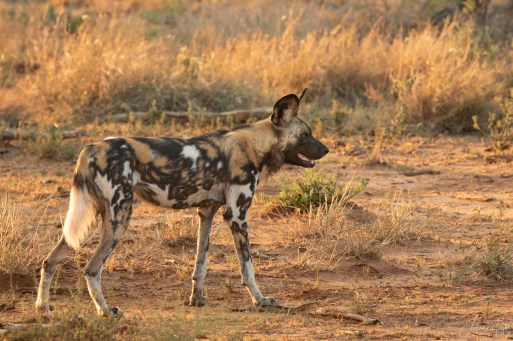
African wild dogs, also called painted wolves or painted dogs, are the second most endangered carnivore in all of Africa (behind the Ethiopian wolf). Today, there are somewhere around 6,000 wild dogs left in fewer than 25 countries. One of the causes of the rapid decline in population numbers is disease, but another reason is the increasing number of conflicts between humans and wild dogs.

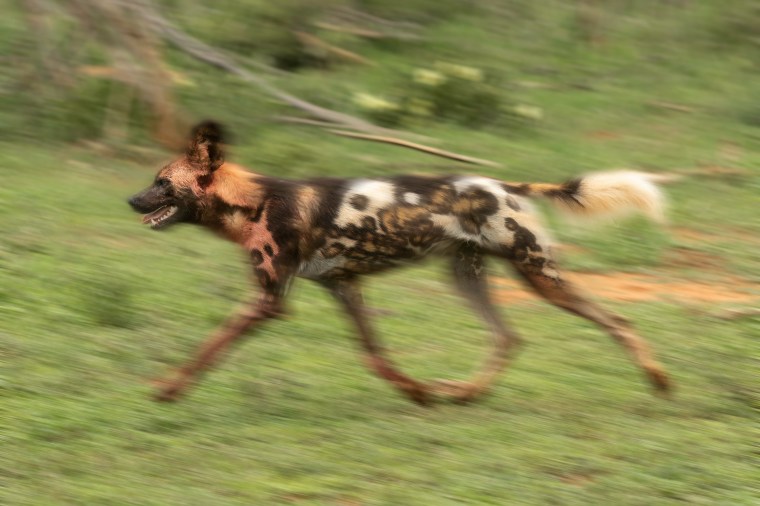
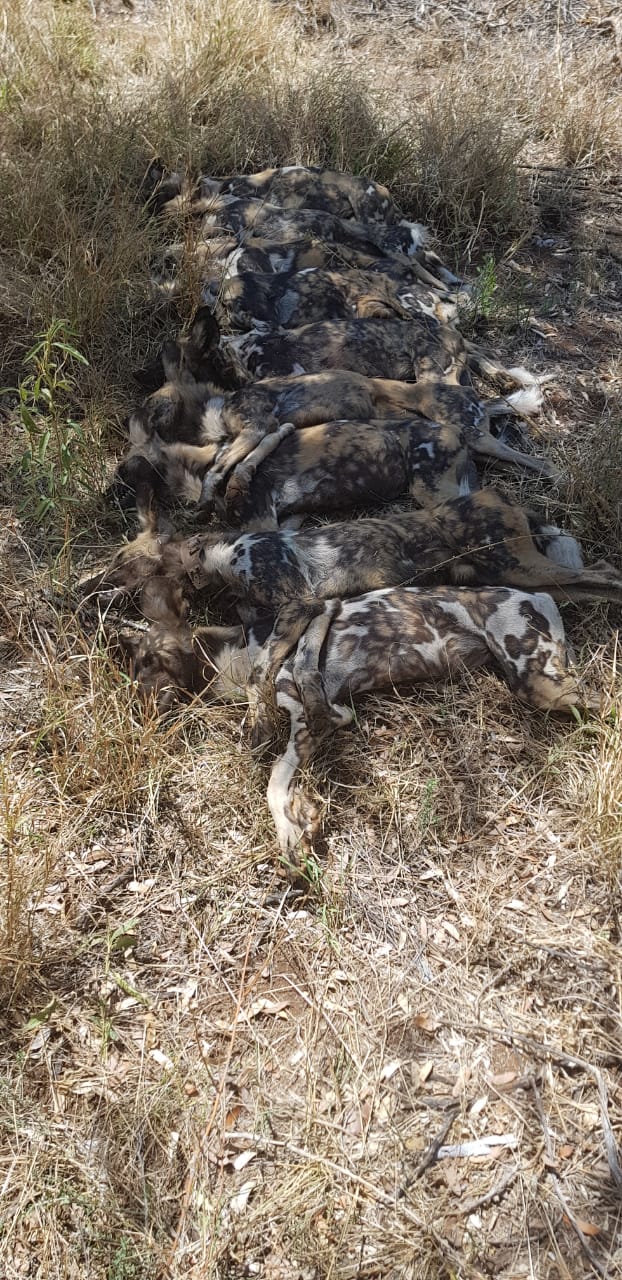
Wild dogs live in packs that range across huge territories, traversing up to 50km in a single day. As subadults mature and leave the pack to find mates, they disperse across even greater distances. With less and less wild spaces available for them to go, wild dogs are increasingly coming into conflict with humans. Wild dogs are very efficient hunters and have one of the highest hunt success rates, around 80% of all wild dog hunts are successful. Because packs share meals with each other, they must hunt often. When they move into areas shared with humans, natural prey sources are less abundant, and livestock may turn up on the wild dogs’ menu if they are desperate. Farmers often will shoot any dogs they see, sometimes even tracking down dens and leave poison out for the pack. As wild dogs travel great distances, they run into poachers’ snares that were set for other game.

1F7A9269-motionblur.jpg

With so many odds against them, it is now up to us to help ensure there are wild dogs in the future.

An international meeting was held in Pretoria in 1997 where the decision to adopt the a metapopulation strategy for wild dogs in South Africa. A metapopulation is a group of geographically isolated populations of the same species, in which an exchange of individuals occurs via dispersal, migration or human controlled management. In South Africa, there are only pockets of safe wild zones left that can support wild dogs. There are a few free roaming packs in the country, but the majority of the wild dog population reside in fenced reserves. While this is imperative for the safety of the wild dogs, it does impede on the ability for dogs to naturally disperse and migrate between packs. So, humans have to get involved artificially create the migration process to ensure new genetics are mixed throughout the country.

Madikwe’s resident wild dog population consisted of 14 of dogs. Late 2018, five young females started to venture away from the pack more and more – they were in full dispersal mode. Young wild dogs, usually of the same sex, will leave their natal pack in search of new mates to avoid inbreeding with related pack members. This behavior is called dispersal. Madikwe realised if they did not do something soon the girls were going to push their luck and attempt to break out of the reserve since there were no non-related male wild dogs with in the reserve. Out of the safety of the reserve boundaries, the dogs would face peril at every turn in the human adapted landscape outside of Madikwe.

What is the solution for stopping the girls from escaping and keeping them inside Madikwe?

Males. (Hey, it is Valentine’s Day after all, let’s think of this as a love story.)

A group of four males from KwaZulu-Natal were also searching for a new home. The Endangered Wildlife Trust coordinated the arrangements to bring the males to Madikwe. Unfortunately, you cannot just bring two wild dogs to the local wild dog park and have them play some fetch and become friends just like that. It is slightly more complicated. Ecologist have found that the best way to smoothly integrate new wild dogs together is to anesthetise all of the dogs and then to rub them together. Yes, that is correct. You literally pick up each dog and physically rub that dog over all of the other dogs. This transfers each of the dog’s individual scents on to the other dogs, making them all smell the same or as if they were in one pack rubbing against each other during meals and socialisation. Once all of the dogs have been properly rubbed up, you lay the dogs touching each other and wake everyone up at the same time. It is best to leave them a nice fresh meal to distract them from the new dogs. By the time everyone wakes up and has eaten, they have reinforced the scent rubbing and the hopes is that they will accept each other.

wilddogintro.jpg

Well that is the hope anyway. And things looked really great for the first week. All nine dogs were eating meals together regularly and appeared to be getting on. After about a week however, the new males singled out one of the females that had taken slightly longer than everyone else to wake up and fully recover from the anesthesia. They started violently picking on her, biting her and pushing her away from meals. Even her previous packmates turned against her. After sustaining wounds, Dr Scheepers was brought out to treat the female. Upon closer inspection, while the female was tranquilised, we realised how bad the extent of the damage was, and the decision was made to send her to the animal hospital at the National Zoological Gardens of South Africa in Pretoria. She is still on the long road to recovery but is getting stronger every day.

Meanwhile, back at the boma, the now eight wild dogs began bonding and a hierarchy started to form. After weeks of observation it became clear that the dogs have chosen an alpha pair. The pack was ready to go back into the wild once more.

1F7A9229

13 February 2019 turned out to be the perfect day. The overcast weather brought cooler temperatures, ideal for some wild dog exploring. A carcass was brought into the boma as usual for the dogs to feed upon, but this time we tied rope to the carcass. As the dogs began to feed on it, the carcass was slowly dragged out of the gate. Just like fishing. But on land. And without a hook. And with dogs instead of fish. Okay, so maybe it wasn’t just like ­­fishing, but you get the idea. The dogs followed suit of their meal and left the boma behind.

The Madikwe girls were back home in the wild, and now they have boyfriends. We are very excited for this new pack and look forward to what the future will bring for them.